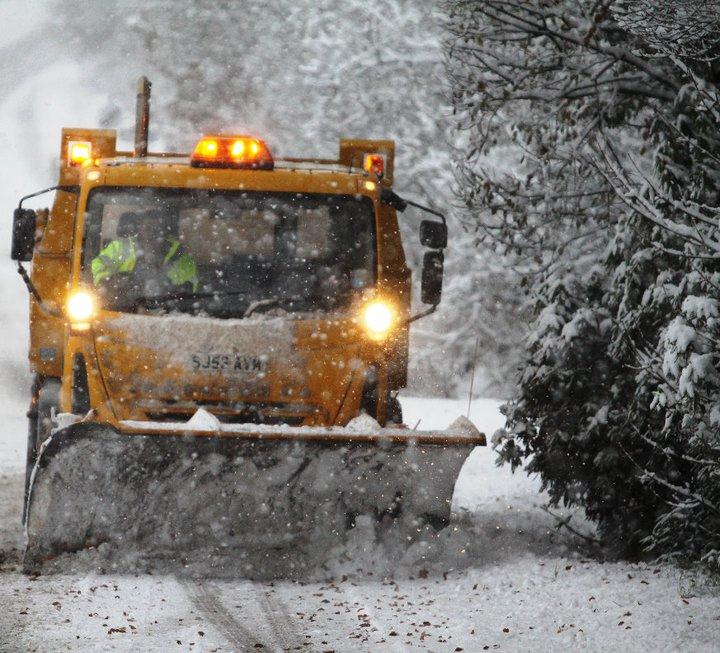
Argyll and Bute Council is preparing for another winter with one of the most extensive road pre-treatment programmes in rural Scotland, treating more than half of the area's adopted road network to help keep communities connected and road users moving safely.
The Environment, Development and Infrastructure Committee, on Friday 9 October, approved the Council's Winter Service Policy for 2026/27. This sets out how roads will be prioritised and treated during periods of ice, frost and snow.
The policy provides for up to 54.57% of the 2300km network to receive preventative treatment, the highest proportion among Scotland's rural local authorities and about 10% above the national local authority average.
Winter standby operations will run from 29 October 2026 until 15 April 2027, with crews ready to respond whenever temperatures are forecast to plummet. The Council maintains 32 treatment routes across Argyll and Bute, covering a vast and geographically challenging area that includes remote mainland communities and islands.
The winter fleet comprises 31 frontline treatment vehicles, including 17 hired gritters, 13 Council vehicles and a contractor-operated vehicle on Jura. Additional reserve and backup vehicles are also available to support operations during severe weather, offering extra resilience when conditions deteriorate.
However, the report highlights the increasing challenge of recruiting and retaining the number of suitably qualified drivers required to operate the service safely and legally. Delivering the current winter treatment programme requires a minimum pool of 72 qualified drivers operating on a rota basis. A review carried out in July identified a shortfall of 13 drivers against that requirement.
The Council is taking steps to address the issue through additional training and contractor support ahead of the winter season. Drivers are drawn from a range of operational services, including roads, waste, fleet and grounds teams, but workforce pressures, an ageing workforce and recruitment challenges continue to affect resilience across the service.
Councillor John Armour, Policy Lead for Roads, Transport and Amenity Services, said: "Argyll and Bute has one of the largest and most geographically diverse road networks in Scotland, and our winter service plays a vital role in maintaining access to communities, schools, businesses and emergency services.
"Our winter roads’ treatment programme is a significant commitment in terms of resources, vehicles and staffing.
"Like many organisations, we are facing challenges in recruiting and retaining qualified drivers. We are working hard to strengthen our resilience, but it is important that people understand the scale of the operation and the pressures involved in delivering this service across such a large area."
The Council's winter service budget for 2026/27 is £2.667 million. During prolonged periods of severe weather, resources will continue to be prioritised towards strategic routes, lifeline connections, emergency access routes and public transport corridors to ensure the greatest benefit for communities across Argyll and Bute. Last year at total of 10,094 tonnes of rock salt was used in all treatments, including grit heaps and bins.
For information on winter road treatment information, visit the Council website.