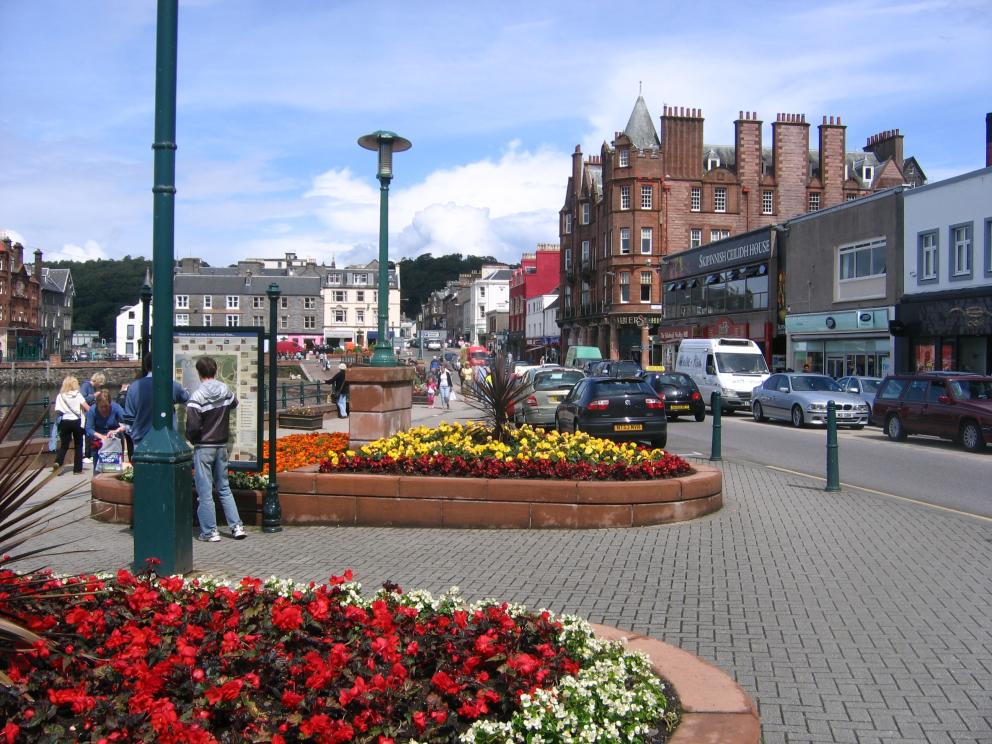
Over the coming months Argyll and Bute Council will be engaging in a conversation with Lorn communities to develop a long- term vision for the sustainable growth and development of the Oban area.
Engagement began last week with discussions with local community councils about a strategic development framework for the area.
Argyll and Bute’s Local Development Plan 2 (LDP2), agreed at local and national government level, identifies the Oban area as a growth area, given factors such as its position at the heart of the identified Tobermory to Dalmally growth corridor, its existing transport infrastructure including the A85, rail line, airport, harbour, and ferry services and a generally younger, more economically active population.
Given potential for an increase in population and the opportunities to promote economic growth, the LDP2 includes an action to develop a 20–40-year long-term Strategic Development Framework (SDF) for the area to enable sustainable development.
This SDF will take into account the need for providing critical infrastructure including schools, utilities, roads public transport, business space, active travel, and housing, and protecting the key environmental features of the area.
At this stage, engagement will consider strategic level issues and possible scenarios on how development will be taken forward. Views given will shape the SDF which will be consulted on as part of the formal consultation process for the Local Development Plan 3, which is expected to take place 2027/28.
The Council has appointed leading independent agency Ironside Farrer, to support with developing the framework.
Opportunities to get involved with giving views will be organised over the coming months.
The Leader of Argyll and Bute Council, Councillor Jim Lynch, said:
“The development of this framework is an exciting opportunity to positively plan for the future of our area. It is important that we balance the need for growth with the area’s outstanding natural environment, but by working together we can ensure that growth is well-managed, sustainable, and enhances the quality of life for current and future residents.”